Key takeaways
- Siding, trim, roof, brick and door colors should read as one set.
- Large samples tested outside beat chips and screens.
- Trim width and accents change the feel as much as color.
- Check HOA and historic rules before you commit.
Work with what you cannot change
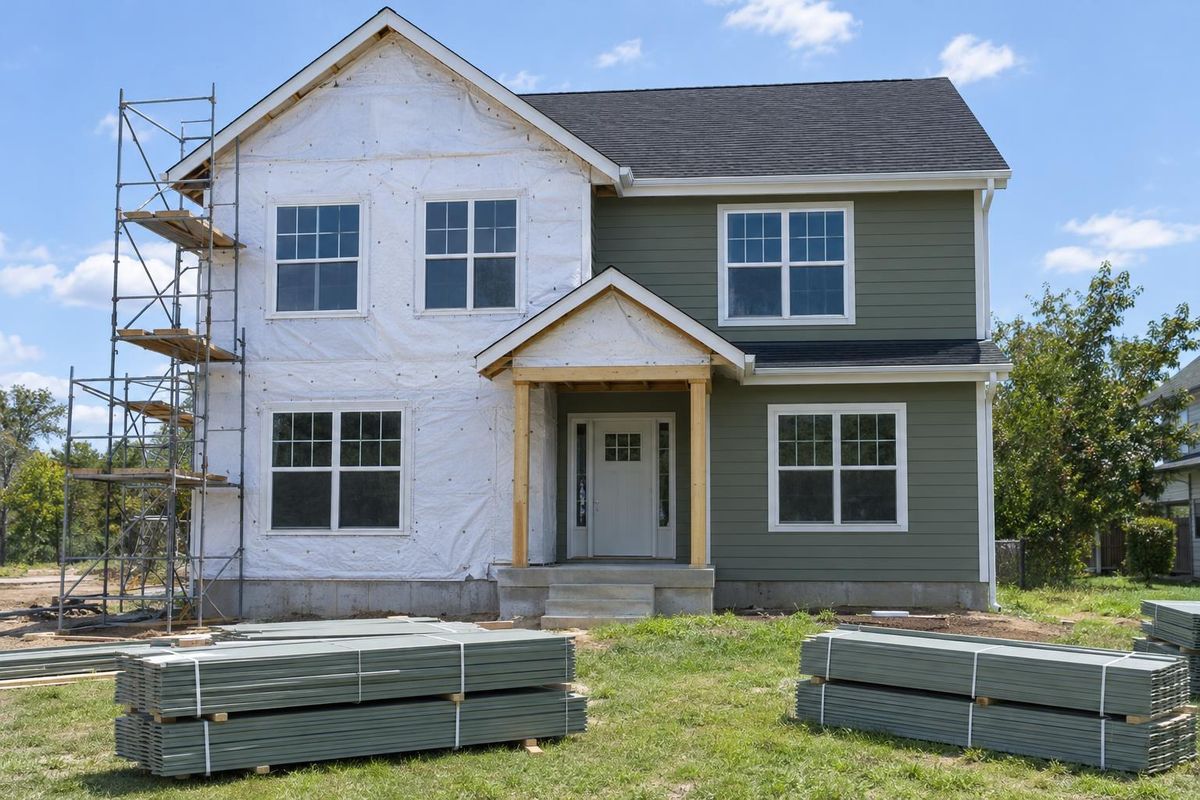
The roof, brick, stone and driveway are fixed. Look at their undertones, warm or cool, and pick siding that agrees. A warm brick pairs with warm neutrals or deep greens, a cool gray roof pairs with blue-grays and whites. Photograph the house and test colors against it.
Think in sets
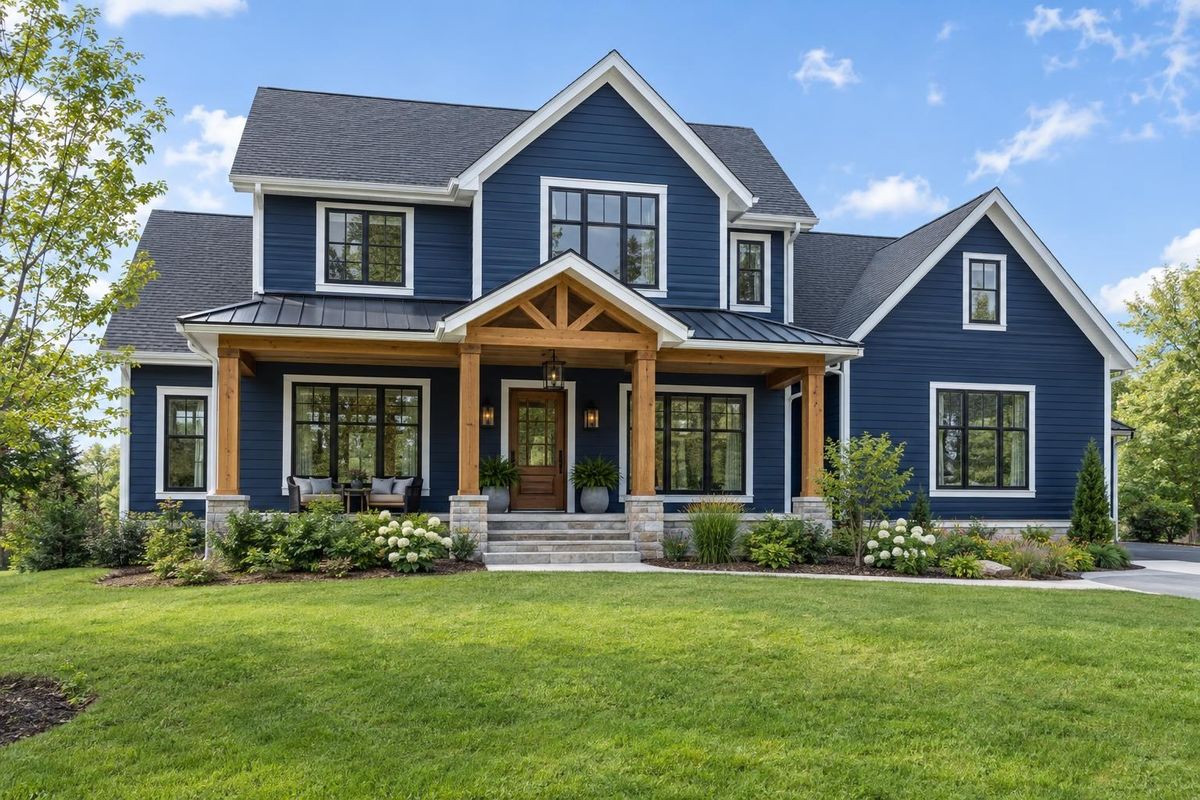
A siding color, a trim color and an accent color for the door and shutters work as a set. Many owners choose a body color, a lighter or crisper trim and a bolder accent. Dark siding with white trim is a popular modern farmhouse look, and soft neutrals are timeless.
Test in real light
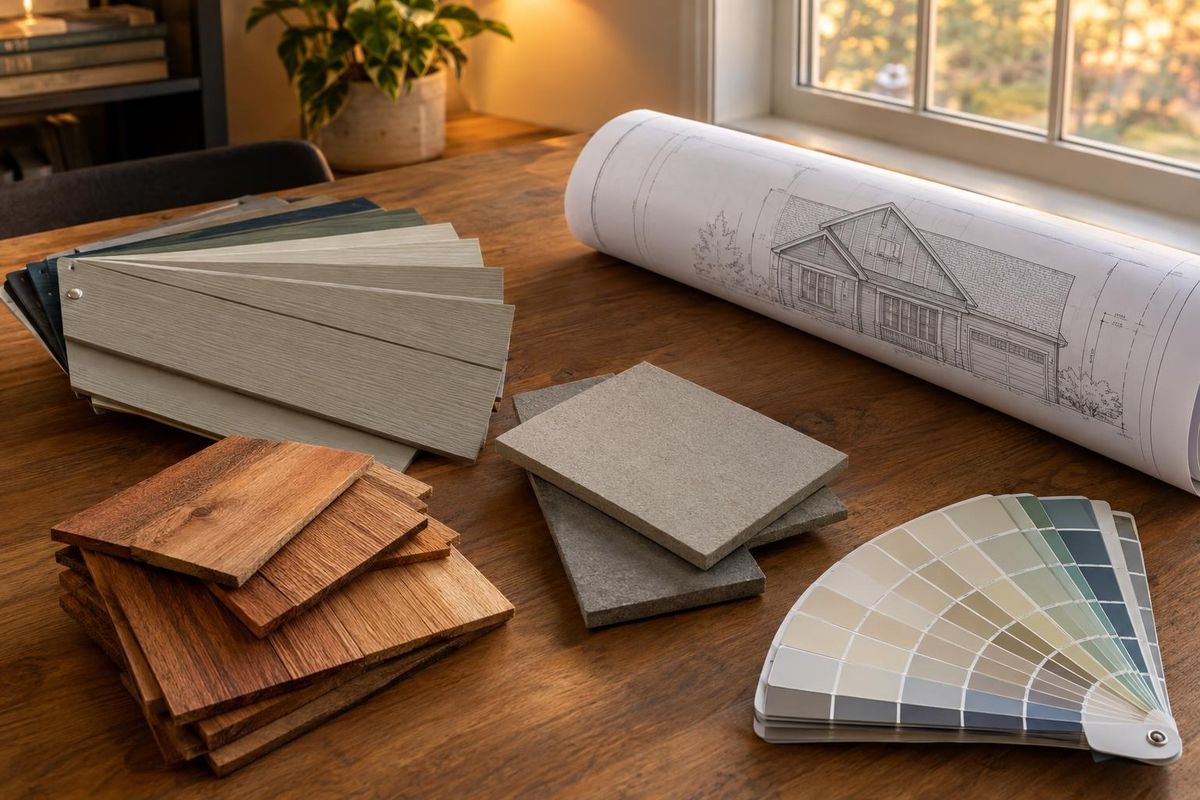
Hold large samples against the house in morning, noon and evening, in sun and shade. Colors shift with the light, the neighbors, trees and the time of year. Live with samples for a few days before deciding.
Details that matter
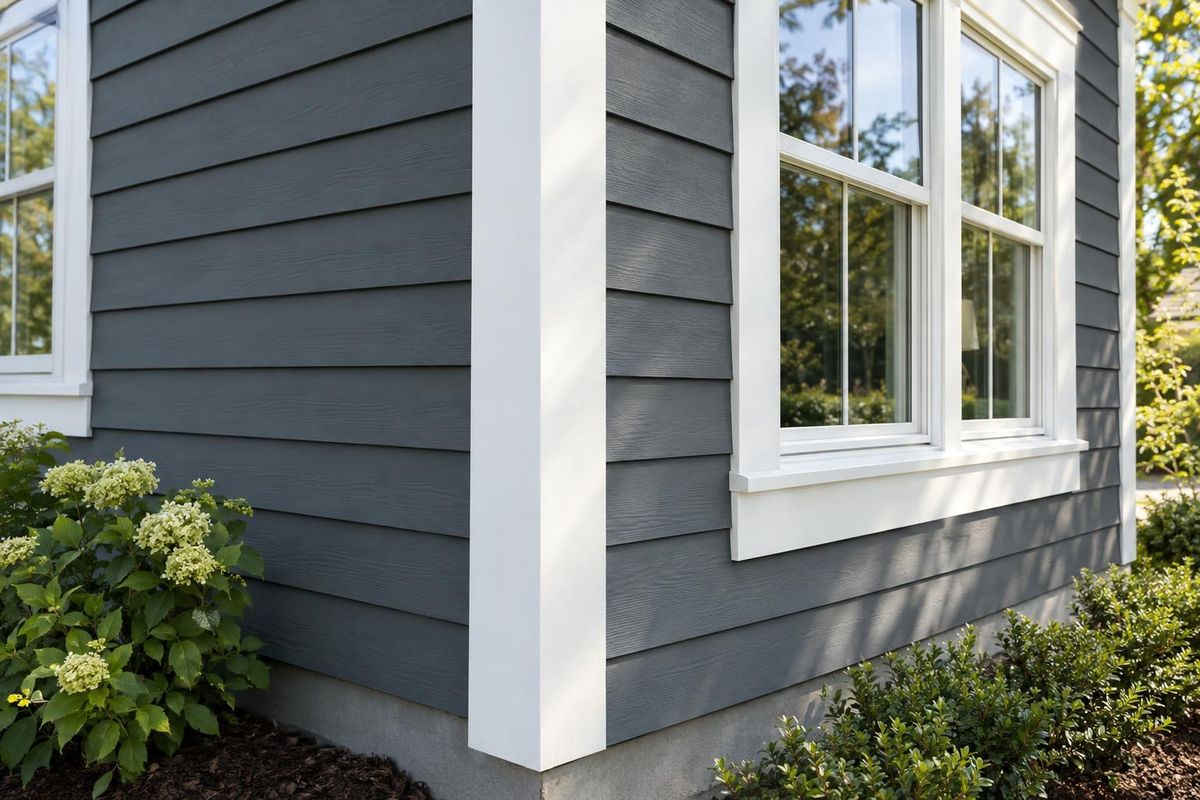
Trim width, corner treatments, gable accents, shutters, porch columns and stone bases give a house shape. Wider trim feels more substantial. A contrasting gable or porch adds interest. Keep the set of choices simple enough that it feels intentional.
Official sites to explore
Brand names and logos belong to their owners. These links open the official websites in a new tab, and we are not affiliated with them.
Quick answers
What colors are most popular?
Whites, grays and soft neutrals remain popular, with deep navy, green and charcoal common for a bolder look.
Will dark siding fade faster?
Dark colors absorb more heat and show fading more, so product quality and exposure matter.
Should I match my neighbors?
Fitting in with the street is wise, and distinctive trim or accent choices keep your home from being generic.